Left or Right: Star Girl Style
JUMBO GAMES StudioCasual
3.896.00 Reviews
- Version
- 0.31
- Installs
- 10.00M
- Age Rating
- Everyone
Screenshots
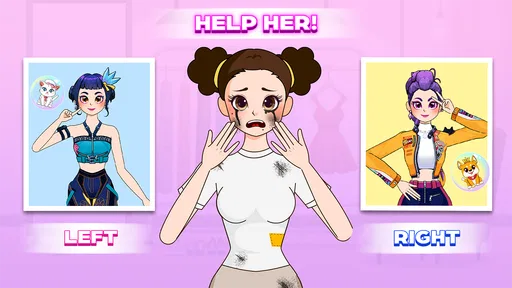
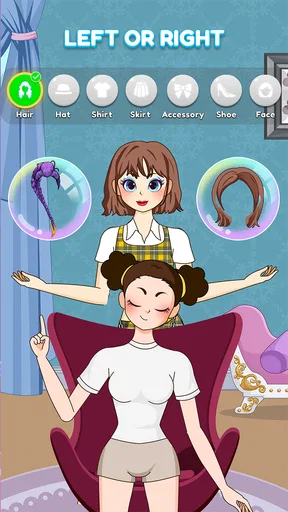
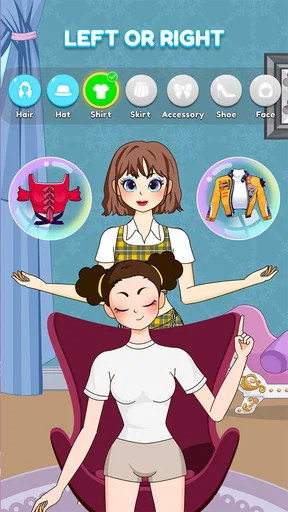
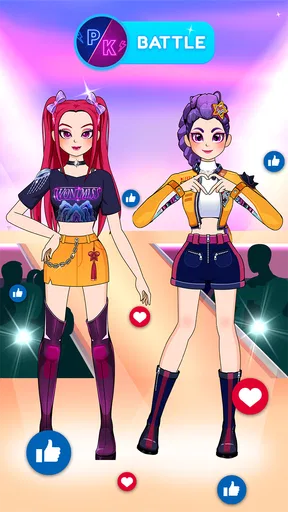
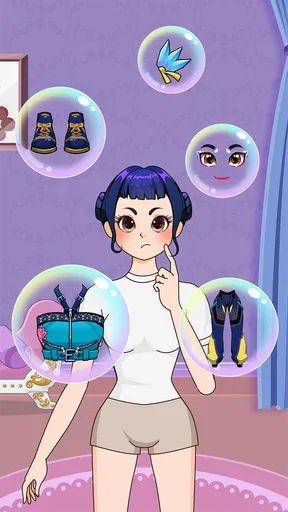
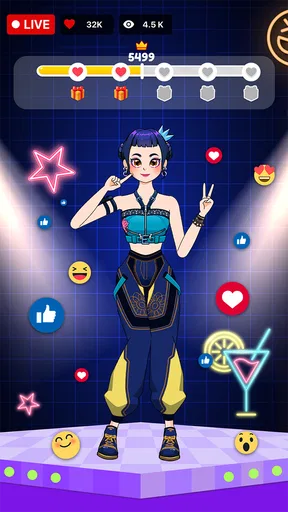
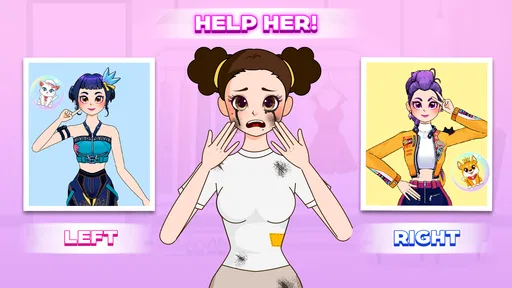
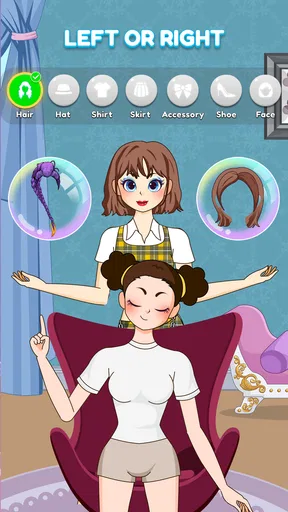
Our Review of Left or Right: Star Girl Style
 Analysis by Appyee
I spent time with Left or Right: Star Girl Style as the kind of casual game you open when you want a quick fashion-themed distraction rather than a deep, demanding experience. Its central idea is easy to understand: make choices between two style options, build a look, and see how your decisions affect the result. That simplicity is the main reason it feels approachable, but it is also the question that matters most after the first few sessions: does choosing between outfits stay interesting once the novelty wears off?
My short answer is that it can earn a place on your phone if you enjoy light fashion games, visual comparisons, and short play sessions. I would not recommend it to someone looking for detailed styling tools, a story-driven experience, or a game with substantial strategy. This is a free casual title from JUMBO GAMES Studio, aimed at Everyone, and its appeal comes from being immediately readable rather than complicated.
The game has already reached over 10 million installs, while its average rating sits at 3.8 from around 14 thousand ratings. Those figures suggest a broad audience, but they also tell me to keep expectations measured. This is a game designed to be picked up quickly, not necessarily one that will become a mainstay for every player.
Why the first week feels so easy to enjoy
The opening appeal is the lack of friction. I do not need to learn a long tutorial, memorize complicated controls, or understand a large map before making progress. The left-or-right format gives every decision an immediate shape. I look at two possibilities, choose the one that fits the look I have in mind, and move on. That rhythm works especially well when I have only a few spare minutes.
What makes the early sessions more engaging than a simple dress-up screen is the small amount of judgment involved. Even when the choices seem obvious, I still find myself asking whether a bold item works better than a safer one, or whether the overall look needs balance rather than a single striking piece. The game turns those small visual decisions into a sequence, which gives the experience a light sense of momentum.
I also like that the fashion theme keeps the game friendly and accessible. It does not require knowledge of real-world brands or an understanding of formal styling rules. A child can enjoy the color and character presentation, while an adult can treat it as a relaxing visual puzzle. The Everyone age rating matches that broad, uncomplicated tone.
During the first week, I found the best use case was short downtime: waiting for an appointment, taking a quick break from work, or winding down before bed. It is more convenient than a game that demands a long uninterrupted session. I can play a little, put the phone down, and return later without feeling that I have abandoned a complicated objective.
That convenience does not mean every choice feels equally meaningful. Some decisions are fun because the contrast is clear, while others can feel like selecting between two variations of the same idea. Early on, the novelty of seeing new combinations carries the experience. I was willing to overlook a repetitive decision because I was still curious about the next look and the next presentation.
The strongest first-week quality is its immediate feedback loop. I make a fashion decision, see the result, and receive enough visual response to understand that my choice mattered within the current sequence. That loop is not deep, but it is clean. For casual players, that clarity is often more valuable than a complicated system that takes several sessions to become enjoyable.
How I approached the choices
I got more enjoyment from treating each round as a complete outfit rather than chasing one supposedly correct answer. Instead of always choosing the flashiest option, I tried to keep a consistent mood in mind. A quieter item could make a stronger piece stand out, while two dramatic choices could make the final look feel crowded. This approach gave me a personal rule to follow and made the decisions feel less random.
That is one of the more useful ways to play if you are worried about the format becoming automatic. Pick a theme for yourself before starting a sequence: elegant, playful, bold, simple, or coordinated. Then judge the alternatives according to that theme. The game remains casual, but you create a small challenge that the basic left-or-right prompt does not provide on its own.
I would also avoid rushing every choice. The game is quick enough that it encourages tapping, but taking a moment to compare the silhouette, color balance, and overall direction makes the activity more satisfying. It is not a professional styling simulator, yet careful observation gives the player more ownership over the result.
What remains useful after the novelty fades
The month-to-month question is harder. The first sessions benefit from discovery, but recurring value depends on whether the decision loop continues to offer variety and whether you enjoy the process itself. For me, the game works best as a rotation title. I can keep it installed alongside other casual games and return when I want something visual and low-pressure, but I would not expect it to occupy every daily gaming session.
Its repeat value comes from the combination of quick rounds and personal taste. If you genuinely enjoy comparing outfits, you can create your own reasons to return. You may want to see how a different choice changes the final presentation, or simply enjoy the satisfaction of putting together a look that feels coherent. That is a softer kind of replayability than progression-heavy games offer, but it can still be enough for occasional use.
The trade-off is that the game does not appear to ask much of you beyond the next fashion decision. Players who need evolving tactics, complex collections, character development, or a strong narrative will probably reach their limit sooner. A more substantial dress-up game would be a better choice if your goal is to spend long sessions refining a wardrobe or managing many layers of customization.
I see the title as closer to a visual snack than a full meal. That is not an insult. Some games are valuable because they fill a short gap without demanding concentration, and this one fits that role well. The problem only appears when a player expects the same level of freshness month after month. A simple loop has to rely heavily on presentation and variation, and any repetition becomes noticeable quickly.
For a realistic routine, I could imagine opening it during a daily commute, making a few choices, and closing it before arriving. I would not build a long-term gaming schedule around it, but I could keep it available for those moments when I want something more interactive than scrolling and less involved than a competitive game. That is where its recurring value feels most convincing.
Who is most likely to keep playing?
I think the best long-term audience is made up of players who enjoy fashion choices without needing a detailed simulation. If you like looking at two visual options and making quick aesthetic judgments, the game gives you a pleasant routine. It may also suit younger players who want a colorful, easy-to-understand activity with no intimidating systems.
It is less suitable for anyone who wants complete control over every part of an outfit. The left-or-right structure is intentionally restrictive. You are choosing from presented alternatives, not designing every detail from scratch. That limitation keeps the game fast, but it also means your creativity is guided by what appears on screen.
I would also steer away from it if you need a game with a strong social or competitive reason to return. The appeal here is personal selection and visual progress, not mastery against skilled opponents. Players who prefer puzzles with a clear solution, action games with demanding controls, or management games with meaningful resource decisions will likely find better lasting value elsewhere.
Maintenance is light, but attention is still required
One advantage of a casual choice game is that it does not create much mental maintenance. I do not have to remember a complicated build, track a large inventory, or prepare for a difficult session. I can return after a break and understand what I am doing almost immediately. That makes it forgiving for people who play irregularly.
The maintenance burden is mainly about managing your own expectations. Because the game is free, it is tempting to treat it as an endlessly expanding fashion experience. I found it healthier to think of it as a compact repeatable activity. If I expect every return to feel completely new, repetition becomes frustrating. If I expect a few pleasant minutes, the game is easier to appreciate.
The current version is 0.31, and the game runs on Android 8.0 or later. Those details make it accessible to many Android users, particularly people who are not using the newest phone. Still, compatibility alone does not guarantee that it will become a permanent favorite. The more important factor is whether the available style decisions continue to feel distinct enough for your taste.
My practical advice is to use it in short bursts and notice your own reaction. If you are still comparing choices thoughtfully after several sessions, it has a place in your casual rotation. If you start tapping the same way without looking, that is a sign to take a break rather than forcing a daily habit. The game does not need to be played constantly to be worthwhile.
It is also worth deciding what kind of satisfaction you want from it. If you enjoy the finished visual result, pause briefly after each sequence and judge the outfit as a whole. If you prefer speed, make quick selections and treat the rounds as a reflexive break. The same structure supports both approaches, but the first produces more involvement while the second makes repetition more obvious.
Where fatigue begins to show
The largest source of fatigue is the narrowness of the main interaction. Left or right is wonderfully clear, but clarity can become predictability. Once I understood the rhythm, the surprise came less from the decision itself and more from the specific visual options placed in front of me. When those options felt too similar, the round lost much of its character.
Another possible weakness is the limited space for correction. In a more detailed fashion game, I can adjust a look gradually, replace one item, or experiment with several combinations before settling. Here, the structure encourages commitment to one of two options. That is efficient, but it can be frustrating when neither alternative matches the look I wanted.
The game may also fatigue players who prefer outcomes based on skill rather than taste. There is some judgment in choosing a coherent outfit, but it is not the same as learning a difficult mechanic. If you are seeking a clear mastery curve, you may feel that your decisions are more expressive than strategic. That distinction matters when deciding whether the game deserves regular attention.
I noticed that the experience is strongest when I bring my own standard to it. Without a personal theme or a desire to compare visual results, the process can become a sequence of taps. With a theme in mind, I have a reason to examine each option. This is a useful workaround, but it also shows that the game’s depth comes partly from the player rather than entirely from its systems.
There is a similar issue with session length. A short session feels appropriate, while a long one can expose every repeated pattern. I would not recommend treating it like a game that should be played for hours. Its design is better suited to several small visits than one extended sitting, and ignoring that can make the experience seem thinner than it needs to be.
How it compares with other casual fashion games
Compared with a traditional dress-up app, this game is faster and more guided. You do not spend as much time searching through menus or arranging every accessory. That makes it a better pick when you want decisions immediately, but a weaker one when customization is the main attraction.
Compared with fashion games built around competition or dramatic challenges, it feels calmer and less demanding. There is no need to prepare for a high-pressure contest in the way a more competitive title might require. The benefit is accessibility; the cost is a smaller sense of achievement for players who want their choices to prove something.
Compared with general casual puzzle games, its visual theme gives it a more specific identity. Someone who enjoys clothes, colors, and character styling may connect with it more quickly than with a number-matching or word-based game. On the other hand, puzzle fans who want increasingly difficult problems may find the fashion decisions too subjective and too lightly structured.
That comparison helped me understand its proper place. It is not trying to replace a full wardrobe simulator or a deep competitive game. It is a quick fashion-choice experience. If that exact balance sounds appealing, the simplicity is a strength. If you want more control, more challenge, or more strategic consequences, another option in the same broad casual space will serve you better.
My long-term verdict on keeping it installed
After the initial excitement, I would keep Left or Right: Star Girl Style installed only if I wanted a dependable, low-effort fashion break. It earns that space through quick access, an approachable format, and a theme that is easy to enjoy without preparation. The fact that it is free also makes experimentation straightforward, especially for families or casual players who do not want to commit to a paid game before knowing whether the style suits them.
At the same time, I would not call it an essential long-term game. Its recurring value depends on how much pleasure you get from repeated visual choices. The core loop is clear and pleasant, but it does not offer the depth I would expect from a game intended to become a primary daily hobby. Players who need constant progression or detailed creative control should skip it in favor of a more substantial alternative.
My best recommendation is to approach it with the right routine: play in short sessions, create your own styling themes, and judge the complete look rather than tapping automatically. Those small habits make the limited choice structure feel more personal and help delay fatigue. They also reveal quickly whether you enjoy the game’s actual appeal or were only attracted by its first impression.
For me, the final judgment is positive but measured. This is a pleasant casual game for quick fashion decisions, not a deep styling workshop. JUMBO GAMES Studio has built something accessible enough for a broad audience, and the Everyone rating reflects that welcoming design. If you want a colorful distraction that asks for little time, it is worth trying. If you want a game that keeps expanding your skills and options over many months, I would look elsewhere.
It earns lasting space as a small break, not as a full-time fashion game. That distinction is important, and once I accepted it, the experience became easier to enjoy on its own terms.
Verdict
Strengths of Left or Right: Star Girl Style
- Quick rounds make it easy to enjoy during short breaks.
- Simple controls are accessible for younger players.
- Star-themed visuals give the game a cheerful atmosphere.
- Fashion choices allow for plenty of outfit combinations.
- The game offers a light, relaxing alternative to complex titles.
Limitations of Left or Right: Star Girl Style
- Some challenges may feel repetitive after extended play.
- Progress can be slow without spending in-app currency.
- The interface may feel crowded on smaller phone screens.
- Limited customization may disappoint players seeking more depth.
- Ads or purchase prompts can interrupt the overall experience.
Other Releases by JUMBO GAMES Studio
View All
Idol Draw: Coloring Master
Casual4.6
Similar Picks in This Category
View All
My Talking Angela
Outfit7 Limited4.2

My Talking Tom
Outfit7 Limited4.3

Pou
Zakeh4.2

My Talking Tom 2: Pet Game
Outfit7 Limited4.3

Candy Crush Saga
King4.6

Bridge Race
Supersonic Studios LTD4.1
Frequently Asked Questions
What is Left or Right: Star Girl Style?
Left or Right: Star Girl Style is a fashion-focused mobile game where you create stylish looks by choosing between two clothing, accessory, hairstyle, or makeup options. Each decision helps shape your character’s appearance and overall style. It is designed for players who enjoy casual gameplay, visual customization, and quick fashion challenges rather than complex controls or lengthy story missions.
How do you play Left or Right: Star Girl Style?
The main gameplay is based on making left-or-right fashion choices. You select the option you prefer, combine different items, and gradually build a complete outfit for your character. Depending on the version and challenge, your look may be judged by its coordination or appeal. The controls are simple, so the game is easy to understand even for first-time players.
Is Left or Right: Star Girl Style free to download and play?
The game is generally available as a free download, allowing players to try the main fashion activities without paying upfront. However, free mobile games may include advertisements, optional purchases, or content that becomes available through progress. Before downloading, it is worth checking the store listing for the current pricing details, in-app purchase information, and any regional differences.
Does Left or Right: Star Girl Style require an internet connection?
Some parts of Left or Right: Star Girl Style may work without a constant connection, especially basic outfit selection and casual play. Nevertheless, an internet connection can be required for advertisements, updates, cloud features, event content, or unlocking certain items. If you plan to play offline, test the game after installation and remember that available features may vary between Android and iOS versions.
Is Left or Right: Star Girl Style suitable for children?
Left or Right: Star Girl Style is generally approachable for younger players because its controls are straightforward and the gameplay focuses on clothing and character styling. Parents should still review the age rating, advertising policy, and in-app purchase settings before allowing children to play. If the game displays online promotions or optional purchases, parental controls are recommended to avoid accidental spending.
Play our best games!


